Master OCI Load Balancer with Terraform – Flexible Configuration & Automation
- Posted by Martin Linxfeld
- Categories devops, flexible, IaC, loadbalancer, resize, terraform
- Date December 22, 2020
- Comments 0 comment
- Tags
OCI Load Balancer Terraform setup is a must-have skill for anyone automating cloud infrastructure in Oracle Cloud. This guide shows how to deploy a flexible load balancer using Terraform and take full advantage of Oracle Cloud’s scalability.
When working with Oracle Cloud Infrastructure (OCI), networking plays a crucial role in building scalable, resilient architectures. One key component is the OCI Load Balancer, which distributes traffic across backend resources to ensure high availability and performance. In this post, you’ll learn how to configure and deploy a flexible load balancer using Terraform, as part of a complete OCI Load Balancer Terraform course experience.

What Is an OCI Load Balancer?
OCI Load Balancer is a fully managed, scalable service that automatically distributes incoming traffic across multiple compute instances within a region. It supports both public and private deployment options and offers advanced features like SSL termination, health checks, and session persistence.
But in 2020, Oracle introduced Flexible Shapes for load balancers, making bandwidth configuration much more dynamic. Instead of choosing a fixed bandwidth (e.g., 10 Mbps or 100 Mbps), you can now define minimum and maximum bandwidth values — giving OCI the flexibility to scale networking as needed.
Why Use Terraform for Load Balancer Configuration?
Terraform is the de facto standard for Infrastructure as Code (IaC), especially in multicloud and DevOps environments. With Terraform, you can declaratively provision and manage load balancers, network configurations, and backend sets. This is especially useful for setting up OCI Flexible Load Balancers in an automated and repeatable manner.
OCI Load Balancer Terraform Code Example
When working with OCI Load Balancer Terraform modules, it’s important to understand the difference between Flexible and Reserved shapes. Oracle Cloud offers flexible shapes that allow you to define both the minimum and maximum bandwidth (e.g., from 10 Mbps to 8,000 Mbps) based on your application’s demands. This means your load balancer can dynamically scale bandwidth during traffic spikes without the need to redeploy or reconfigure infrastructure.
Using Terraform, you can define these properties declaratively, making your deployments repeatable and version-controlled. Here’s an example Terraform snippet:
Here’s a simplified example of configuring a flexible load balancer in Terraform:
resource "oci_load_balancer" "flex_lb" {
  compartment_id = var.compartment_id
  shape          = "flexible"

  shape_details {
    minimum_bandwidth_in_mbps = 10
    maximum_bandwidth_in_mbps = 100
  }

  subnet_ids = [
    oci_core_subnet.public_subnet_1.id,
    oci_core_subnet.public_subnet_2.id
  ]

  display_name = "FoggyKitchenFlexLB"
}
This snippet sets up a flexible load balancer with min/max bandwidth limits and deploys it across two subnets for high availability.
This flexibility is perfect for microservices-based architectures, where workloads can vary significantly throughout the day. By integrating this into your Terraform workflow, you reduce operational overhead and enable cloud-native elasticity with minimal effort.
Whether you’re building a greenfield project or modernizing existing infrastructure, using OCI Load Balancer Terraform automation helps ensure performance, scalability, and cost-efficiency at scale.
When to Use Flexible Load Balancers
Flexible load balancers are perfect for:
Variable workloads (e.g., e-commerce sites, API backends)
Microservice applications hosted in OCI Kubernetes Engine (OKE)
Scenarios requiring bandwidth-based autoscaling
They’re also helpful in proof-of-concept or dev/test environments where cost and performance need to be fine-tuned.
Related Learning Paths
If you’re interested in going further with Terraform automation in OCI, check out these self-study courses:
👉 OCI Kubernetes Engine with Terraform/OpenTofu (2025 Edition)
- 👉 OCI DevOps Terraform Course – Learn CI/CD Automation on Oracle Cloud (2023)
You can also explore the source code and examples in this GitHub repository (if applicable).
Further Reading
For more detailed information on how to configure and manage load balancers in Oracle Cloud, check out the official OCI Load Balancer documentation.
Read more about OCI & Terraform
- OCI Providers in Terraform (Multi-Region Setup)
Learn how to define and work with multiple providers and aliases — essential knowledge when deploying compute resources or storage across multiple OCI regions. OCI VCN with Terraform
A foundational guide to building Virtual Cloud Networks, subnets, and routing in OCI – the networking layer every flexible compute shape ultimately runs in.OCI Block Volume with Terraform
Step-by-step automation of Block Volumes for your compute instances, including attachment patterns that pair naturally with Flexible Shapes.OCI Block Volume Cross-Region Replication with Terraform
How to protect workloads running on Flexible Shapes by replicating their block volumes across regions for disaster recovery scenarios.
OCI Load Balancer Terraform Course – Final Thoughts
Using Terraform to deploy OCI Load Balancers gives you unmatched control, scalability, and reusability. Combined with the flexible shape configuration, this approach ensures that your apps can scale with changing workloads while optimizing costs. The OCI Load Balancer Terraform integration allows you to define networking rules, backend sets, and listeners directly in code.
Whether you’re a beginner or an experienced DevOps engineer, this tutorial is a key part of mastering networking automation in Oracle Cloud.
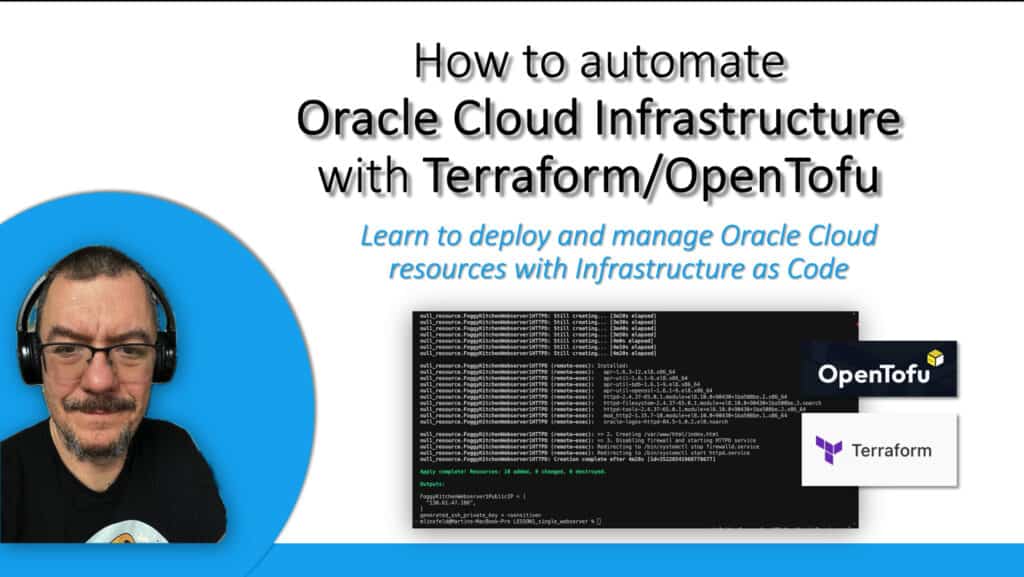
If you’re ready to go beyond load balancers and automate complete OCI environments, check out my full Terraform flagship course.
🚀 Take Your OCI Automation to the Next Level
This blog gave you a taste of what’s possible with Terraform on OCI.
In the full flagship course you’ll:
- Build OCI networks, compute, and load balancers from scratch
- Automate with Terraform / OpenTofu step by step
- Gain lifetime access to 10+ real-world modules
🔒 Lifetime • ⏱️ Self-paced • 🧪 Real labs