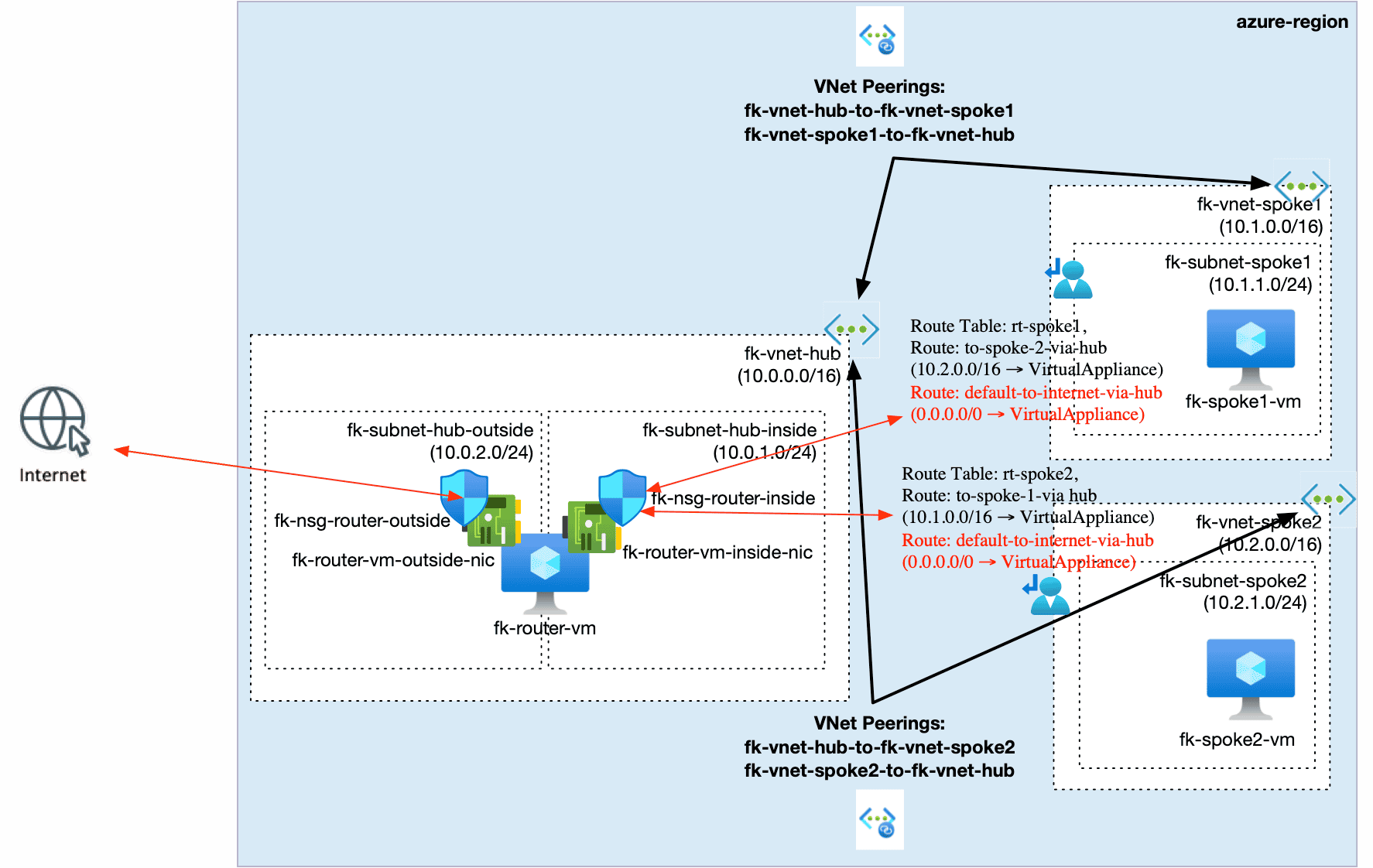
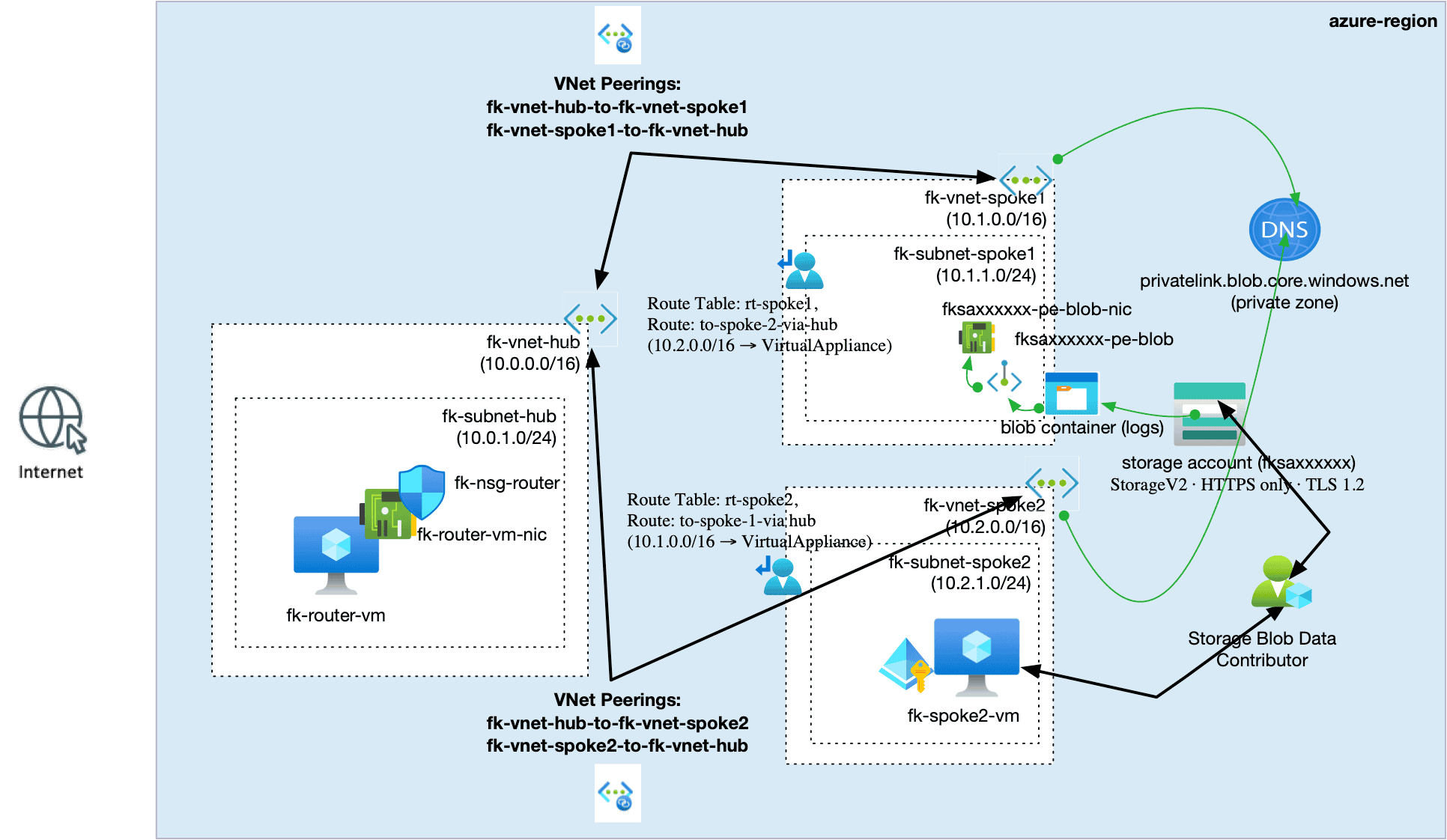
Introduction Azure hub spoke private endpoint Terraform setups are where simple designs start to break. In a previous article, I showed how to build hub-and-spoke routing in Azure using Terraform/OpenTofu modules. That setup introduced a key idea: Hub-and-spoke is not about peering. It is about controlling traffic flow. But that …
Introduction Azure network segmentation Terraform is a key pattern used to define boundaries and control traffic in hub-and-spoke architectures. In previous articles, we explored how to connect VNets, control routing, and enforce outbound traffic using forced tunneling. At this point, the architecture may look complete: VNets are connected Traffic is …
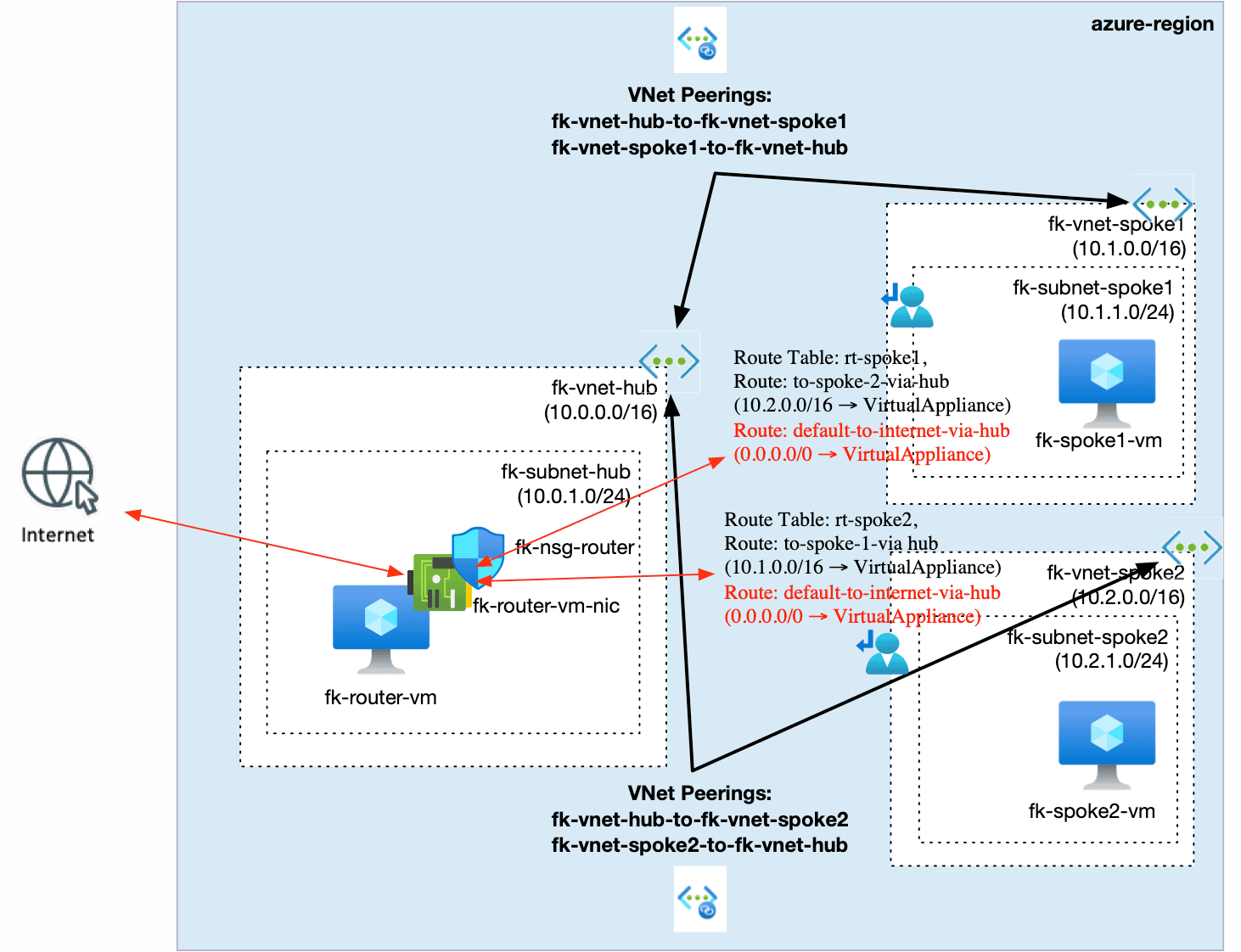
Introduction This article demonstrates Azure forced tunneling Terraform in a practical hub-and-spoke architecture. Azure forced tunneling with Terraform is a key pattern used to control outbound traffic in hub-and-spoke architectures. In the previous article, we introduced routing between spokes using a central Virtual Appliance. Traffic between VNets was no longer …
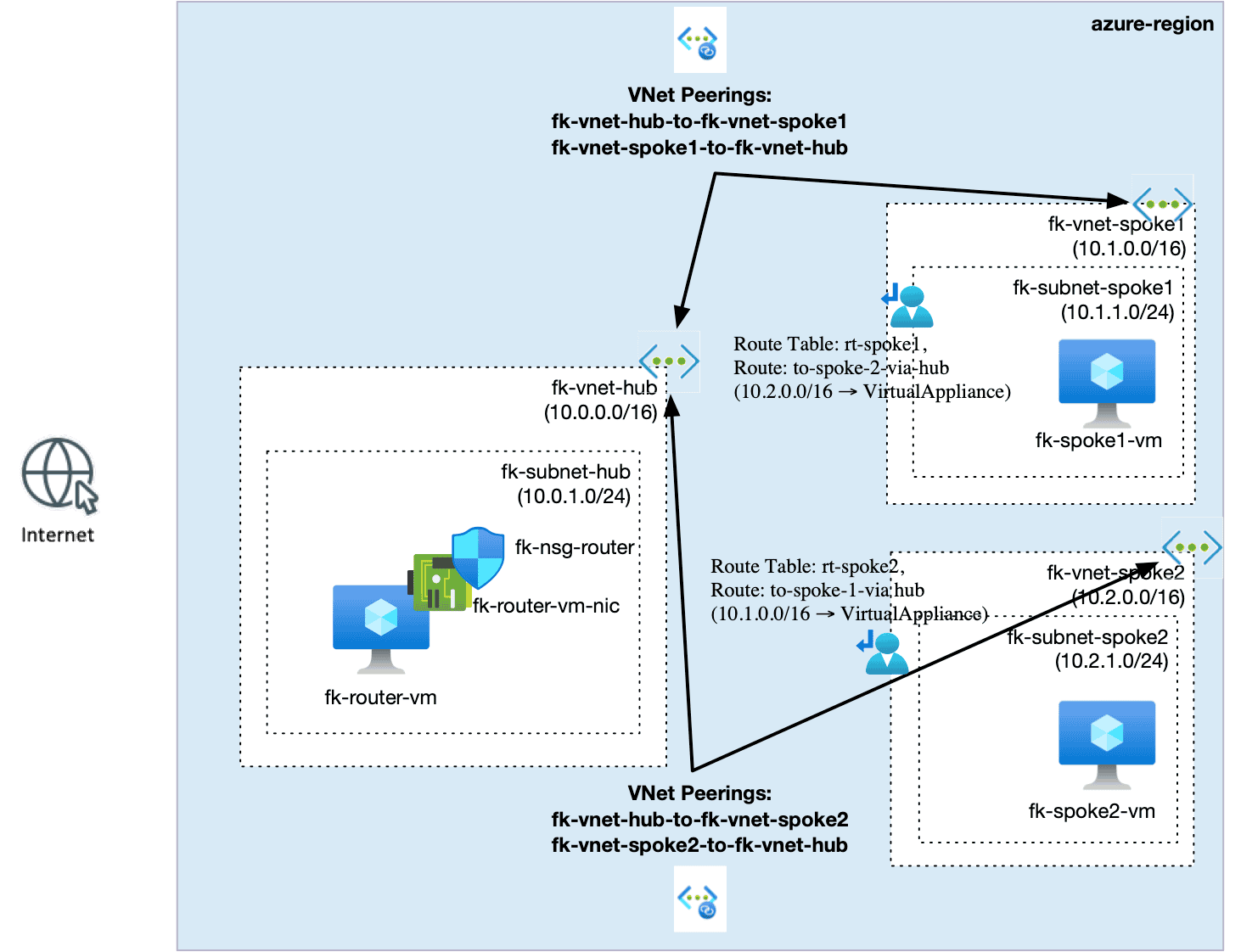
Introduction Azure hub spoke routing Terraform is a common pattern used to solve one of the key limitations of Azure VNet peering. In the previous article, we built a clean hub-and-spoke topology using Azure VNet peering.At first glance, everything looked correct — VNets were connected, and communication seemed possible. But …
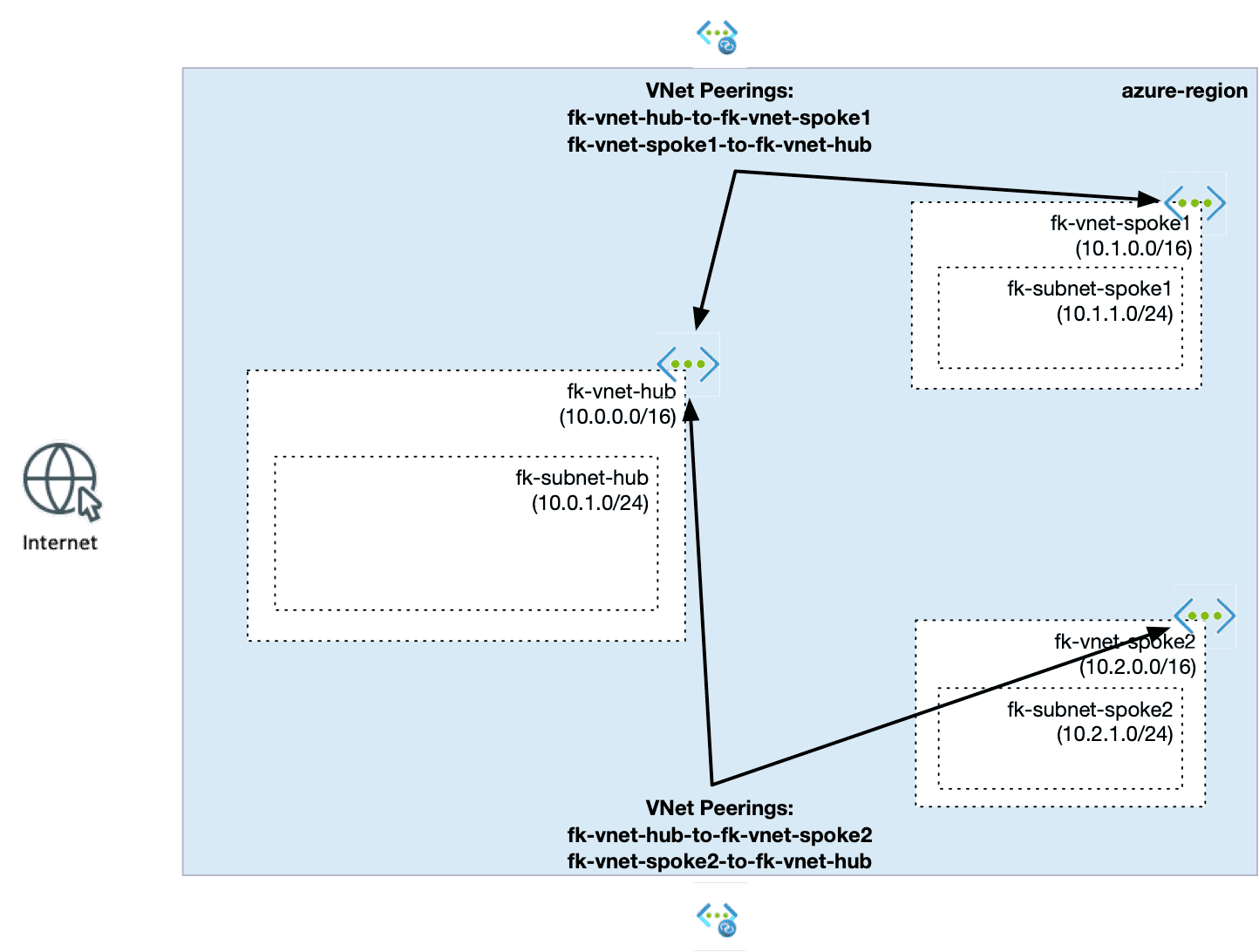
In this guide, we explore how Azure VNet peering Terraform works in real-world hub-and-spoke architectures. When engineers start building hub-and-spoke architectures in Azure, there is one assumption that almost always appears: If both spokes are connected to the hub, they should be able to communicate with each other. That assumption …
Deploying AKS in private mode is where Azure Bastion Terraform becomes essential. The public API endpoint disappears, your nodes sit deep inside a private subnet, and suddenly the big question is: How do you get inside — safely — without punching holes in your network? That’s exactly where Azure Bastion …