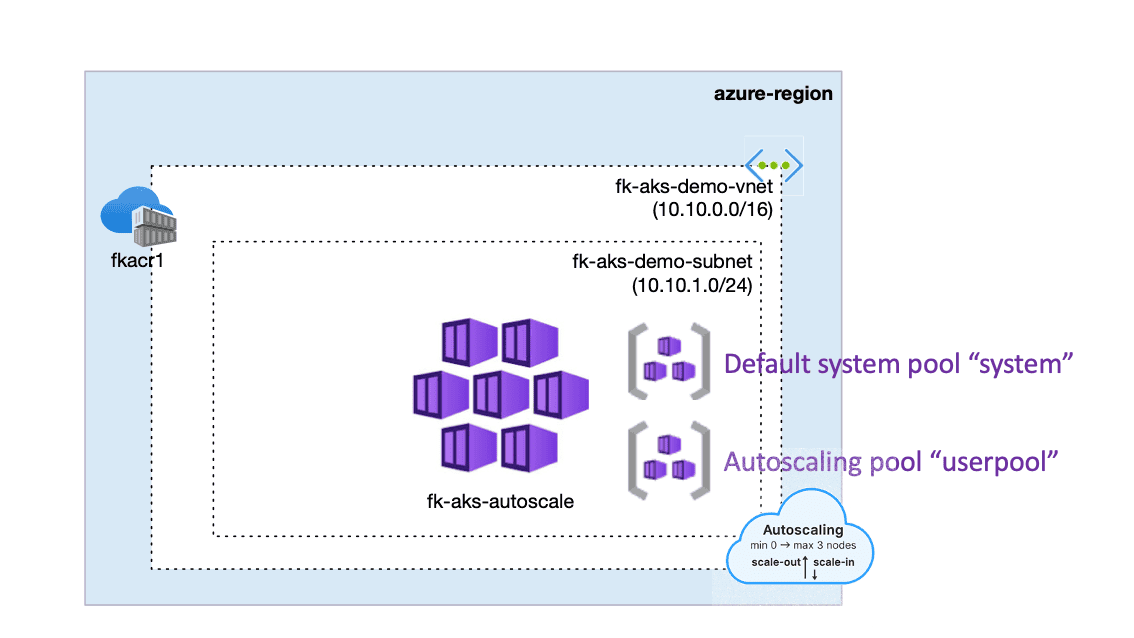
In the previous article, we built a dedicated user node pool in Azure Kubernetes Service (AKS). In this post, we take the next step and introduce the AKS autoscaler Terraform configuration that transforms a static cluster into an elastic one. That setup is already a huge improvement over running everything …
AKS additional node pool Terraform setups are one of the most practical ways to scale and isolate workloads in Azure Kubernetes Service. In this guide, we’ll create a fully functional user node pool and deploy workloads to it using Terraform/OpenTofu. Azure Kubernetes Service (AKS) becomes dramatically more flexible when you …
AKS Log Analytics Terraform is one of the cleanest ways to enable Azure Monitor and Container Insights for your Kubernetes clusters. In this article, I’ll show how the FoggyKitchen AKS module automatically creates a Log Analytics Workspace and connects it to your cluster without any manual steps. Monitoring is one …
In this guide, you will learn how Azure Container Registry Terraform works with AKS when deploying workloads with Terraform — a crucial workflow for any real-world Kubernetes project. When you start automating workloads on Azure Kubernetes Service (AKS), the first real challenge is not the cluster itself — it’s your …
Introduction When building Azure Kubernetes Service (AKS) clusters with Terraform or OpenTofu, networking isn’t just configuration — it’s architecture.AKS supports two main network plugins: Kubenet and Azure CNI. Your choice between them determines how pods receive IPs, how traffic is routed, and how your cluster integrates with existing VNets.In this …
Deploying AKS in private mode is where Azure Bastion Terraform becomes essential. The public API endpoint disappears, your nodes sit deep inside a private subnet, and suddenly the big question is: How do you get inside — safely — without punching holes in your network? That’s exactly where Azure Bastion …
In this post, we’ll explore how to deploy Azure PostgreSQL Terraform, using Private DNS, subnet delegation, and full lifecycle control. Databases are the heart of every cloud deployment. While compute instances can spin up and down in seconds, your data layer demands stability, privacy, and precision. In Azure, that’s where …
Azure File Storage NFS Terraform is a common scenario when you want to secure shared storage with network rules and Private Endpoint. Azure File Storage is a powerful service for sharing files across VMs. But in enterprise or multicloud environments, exposing a storage account publicly is rarely acceptable. In this …
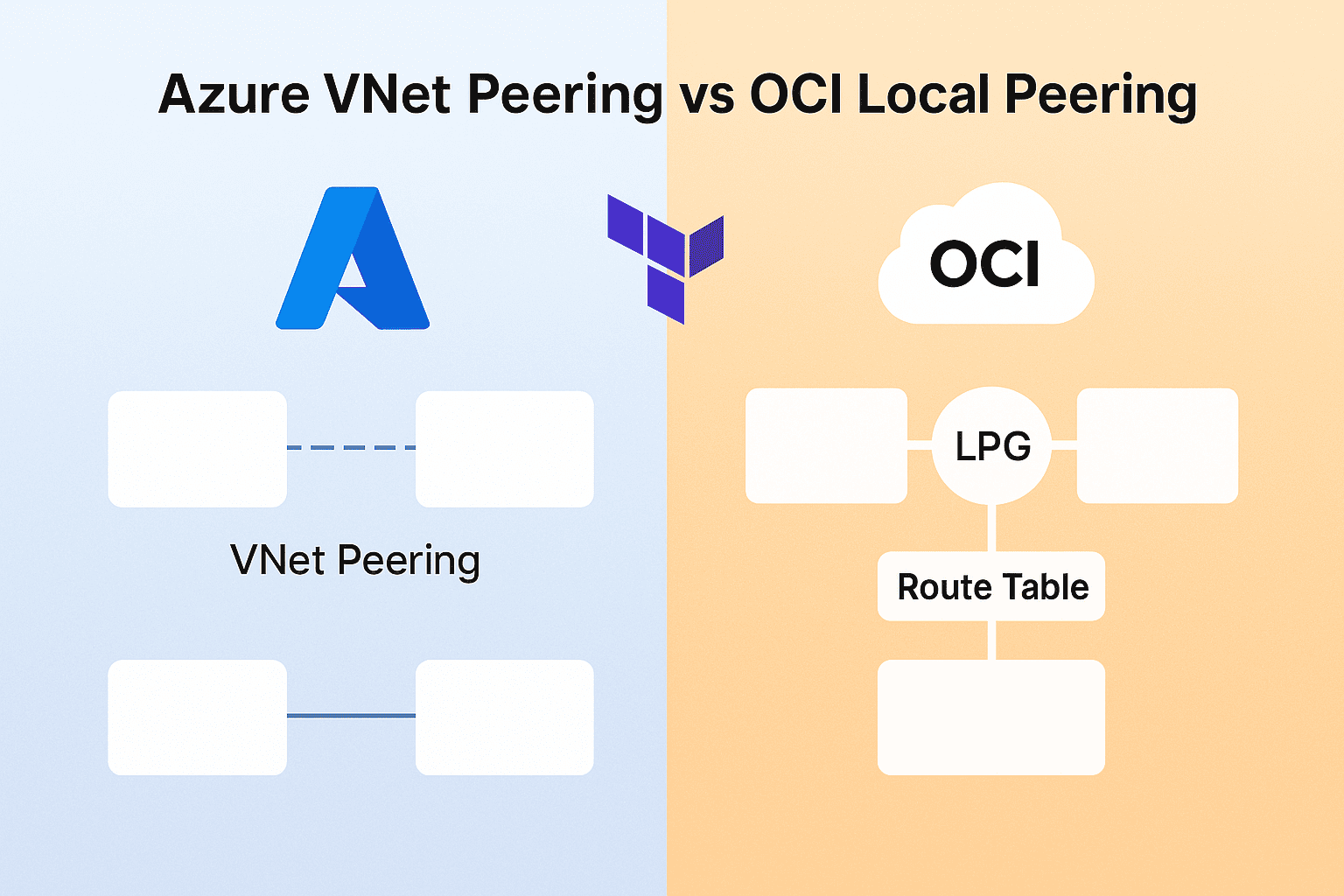
Introduction In this article, we compare Azure VNet Peering vs OCI Local Peering Terraform, two approaches to local connectivity in multicloud networking. When designing multicloud architectures, one of the most critical tasks is establishing secure and efficient network connectivity between workloads. Instead of routing traffic through the public internet — …
In this post, we’ll explore how to create and attach an Azure Managed Disk Terraform/OpenTofu, one of the simplest ways to automate storage provisioning in Azure. When you automate infrastructure across clouds, you quickly realize that “block storage” doesn’t mean the same thing everywhere.In this post, we’ll explore how to …